Product Description
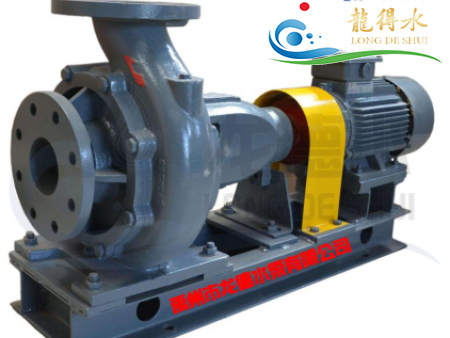
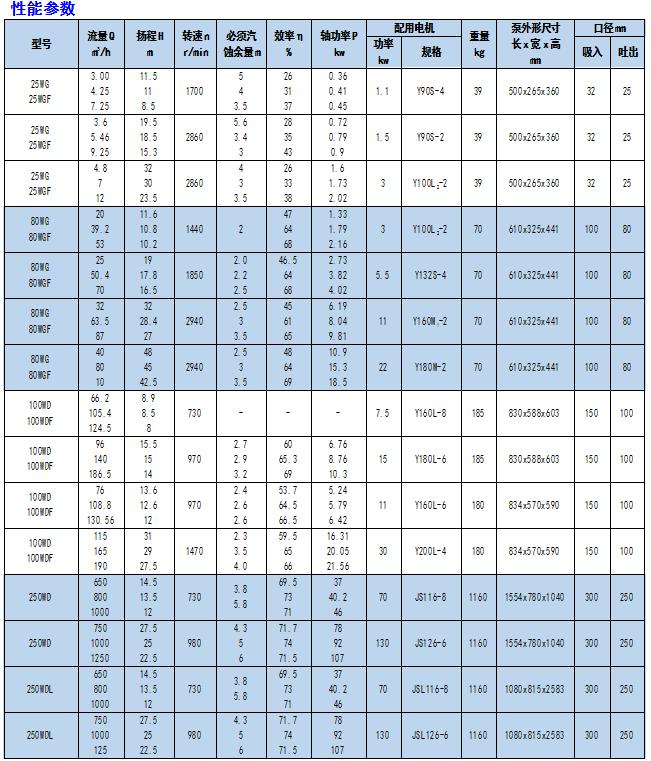
WD, WDF, WDL, WG, WDF pumps are suitable for transporting sewage, feces, and liquids with fibers or suspended solids below 80 ℃ (the size of suspended solids clumps does not exceed 80% of the discharge outlet). The overcurrent components of WDF and WGF pumps are made of stainless steel, making them suitable for transporting wastewater containing acids, alkalis, or other corrosive substances. It can be used by chemical industry, scientific research and other departments to transport chemical slurry with a temperature not exceeding 80 ℃ in the process flow, and can also be used for conveying slurry in the food industry. The discharge direction of WD, WDF, WDL, WG, and WGF pumps can be changed arbitrarily at 45 ° intervals, while 250WD and 250WDL pumps can rotate 12 directions at 30 ° intervals for use. The shaft seal is generally sealed with packing. F-type corrosion-resistant uses acid resistant asbestos packing or mechanical seals. Except for the 250WD pump which uses thin oil lubrication, all bearings are used for oil lubrication. Model Meaning Example: 100WGF Example: 250WDL1.100- Pump Discharge Diameter (mm) 1.250- Pump Discharge Diameter (mm) 2 W - Sewage 2 W-wastewater 3 G-high lift 3 D - Low head 4. F - Corrosion resistance 4 L - Vertical
Installation & Maintenance Notes
- 1 Before first start-up, check the motor rotation direction and make sure it matches the pump direction.
- 2 Every time before starting, turn the shaft by hand through one full revolution — it must turn freely without jamming or rubbing.
- 3 Keep a 2–3 mm clearance at the coupling.
- 4 Grease the bearings regularly every shift.
Related Products
Hydraulic Sand Pump
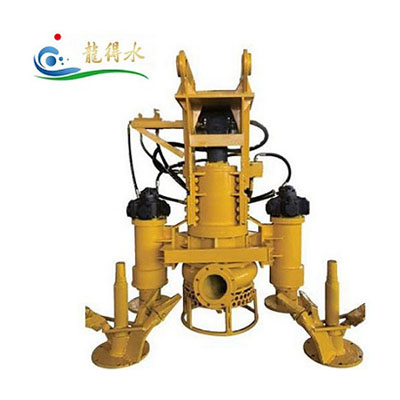
Selection of hydraulic sediment pump: 1. Select the pump type according to the actual flow rate, head, and delivery distance required for the operating conditions, and calculate the required hydraulic power based on the motor power of the pump type; 2. The hydraulic power calculated based on the selected pump type matches the hydraulic oil station that can meet the hydraulic power requirements; 3. Calculate the actual output power of the excavator hydraulic system and select the appropriate pump type; 4. Customized modifications can also be made according to specific customer requirements (such as screw type, rake suction type, bucket wheel type). Drive mode: hydraulic drive Material used: high chromium wear-resistant alloy Additional mixing: dual agitator type, single twist cage
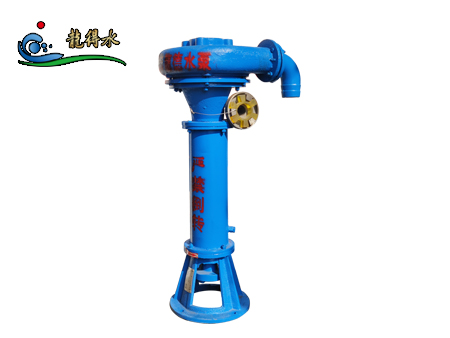
NL80-300-11 Vertical Slurry Pump
Attention: 1. Before starting up, test the motor rotation direction, which should be consistent with the pump rotation direction before starting up. 2. Rotate the pump manually for one week before each start-up, and only start when there is no jamming or grinding. 3. Leave a gap of 2-3 millimeters between the couplings. 4. Add butter on time for each shift. This pump has the advantages of long service life, simple structure, and reliable performance. The sealing type is oil seal type, and the overcurrent components have two types: ordinary wear-resistant and high wear-resistant. Note: Two leaves with a particle size of 70 millimeters.
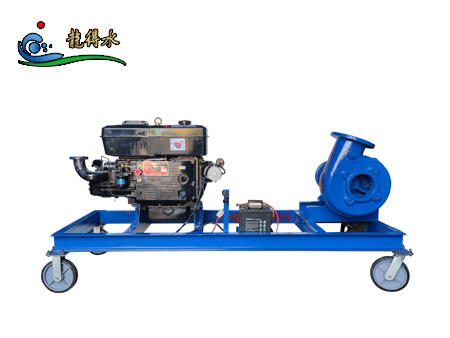
6PS-30 Diesel Engine Horizontal Pump
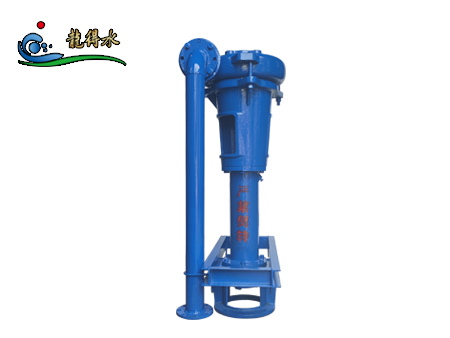
3PNL-22 Vertical Slurry Pump
Attention: 1. Before starting up, test the motor rotation direction, which should be consistent with the pump rotation direction before starting up. 2. Rotate the pump manually for one week before each start-up, and only start when there is no jamming or grinding. 3. Leave a gap of 2-3 millimeters between the couplings. 4. Add butter on time for each shift. This pump has the advantages of long service life, simple structure, and reliable performance. The sealing type is oil seal type, and the overcurrent components have two types: ordinary wear-resistant and high wear-resistant. Note: Two leaves with a particle size of 70 millimeters.